From 1977 to 1994, the best chess players in the world came to Tilburg every autumn. The Interpolis tournament brought Karpov eleven times, and he won seven of them; Kasparov came four times; on the good days more than a thousand people came to watch.
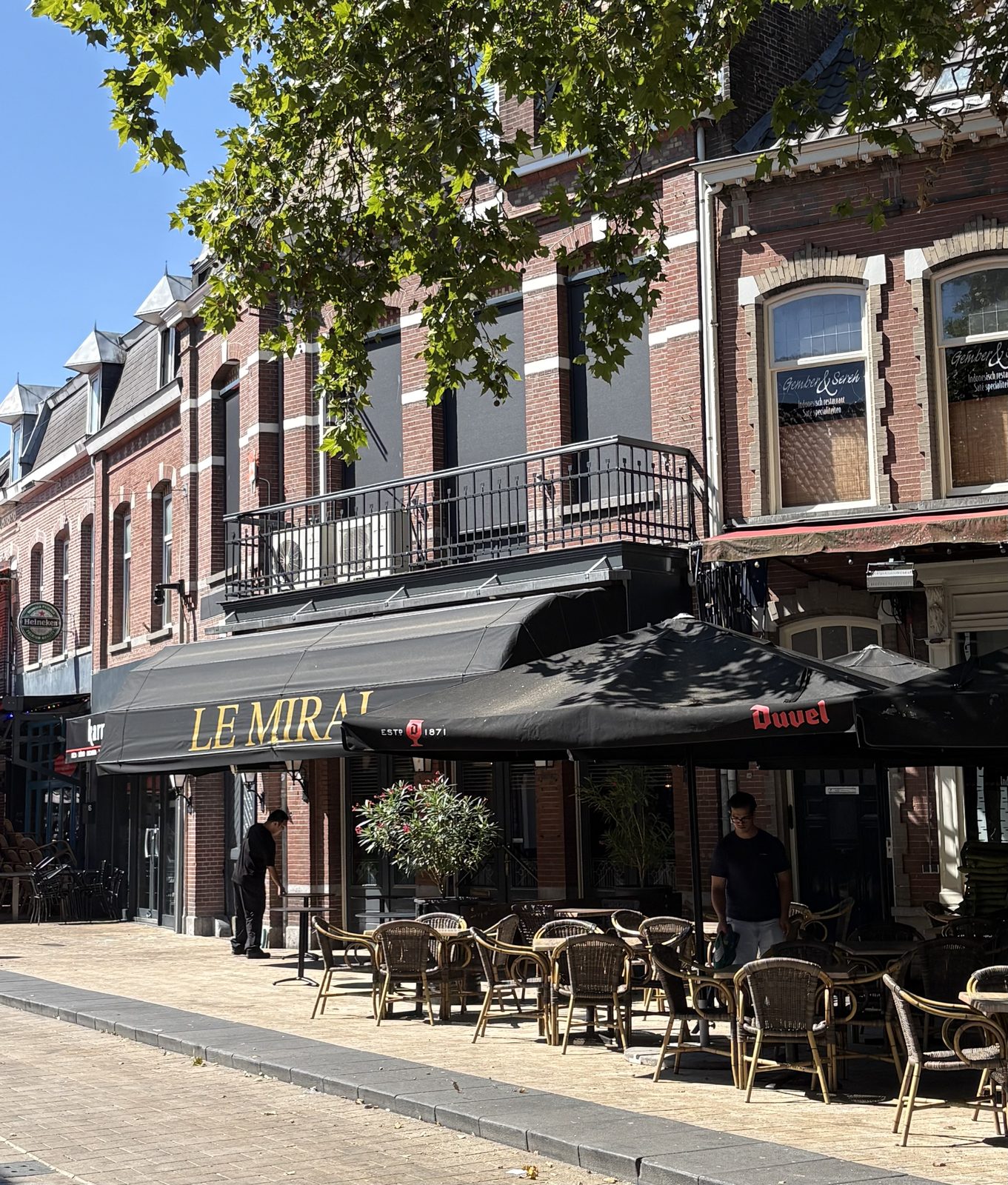
That ended in the nineties. What did not end was a chess club that had started five years before the first Interpolis, in 1972, when students from the Katholieke Hoogeschool, the Conservatorium and the Sportakademie fought out their games at Café Voskens, officially De Roskam, at Heuvel 5. The following year they entered the regional competition as De Stukkenjagers. Their venue was sold in 2001, and the address is a restaurant now, Le Mirai; the club moved on. In the twenties of this century it grew into the largest in Noord-Brabant, and its members still meet every Wednesday evening, in the Tilburg cinema Cinecittà.
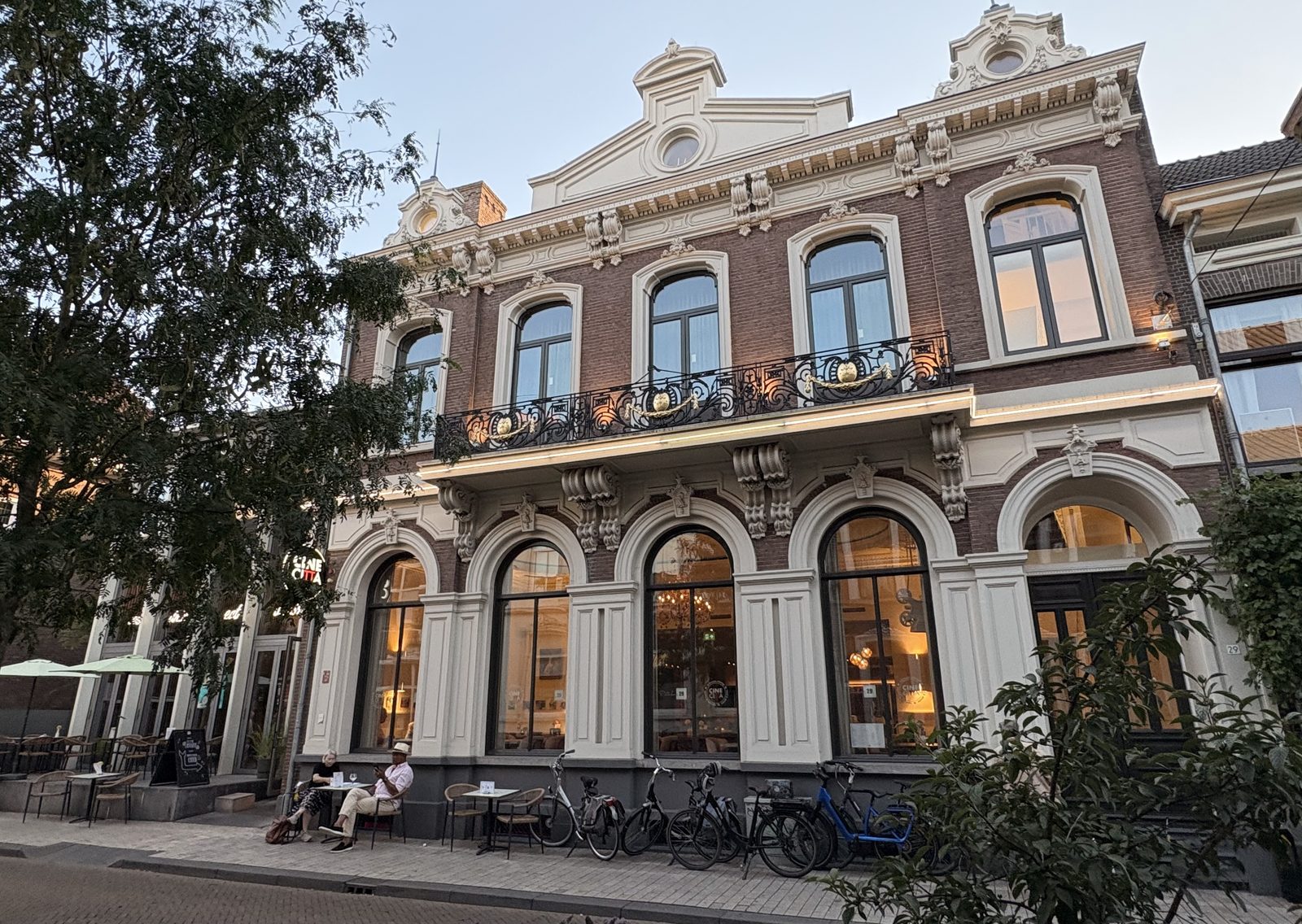
Cinecittà, on the Willem II Straat, has been showing films for over a century. It is a national monument, an arthouse cinema named after the studios in Rome, the kind of place whose own publicity promises no blockbusters.
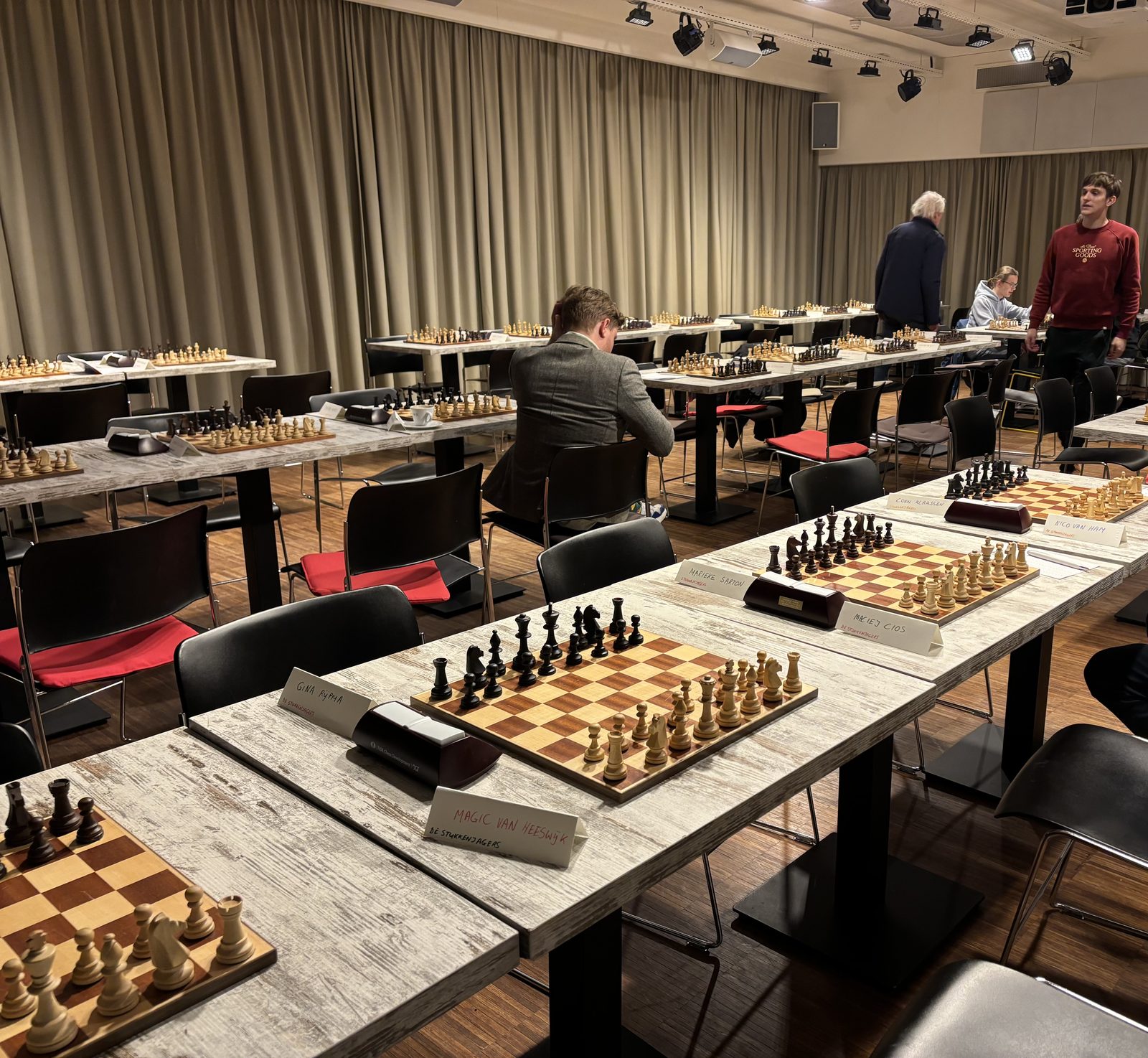
From about seven, the chess players come in through the atrium. César Becx, who has been organising the internal competition for decades, usually sits at a table there to welcome people as they come in. Some stop at the bar. The playing room has been set up earlier by volunteers, players who agreed to come before the others.
The boards are waiting. Pieces are set up. Digital clocks sit beside them, still inactive, small machines for turning thought into pressure.
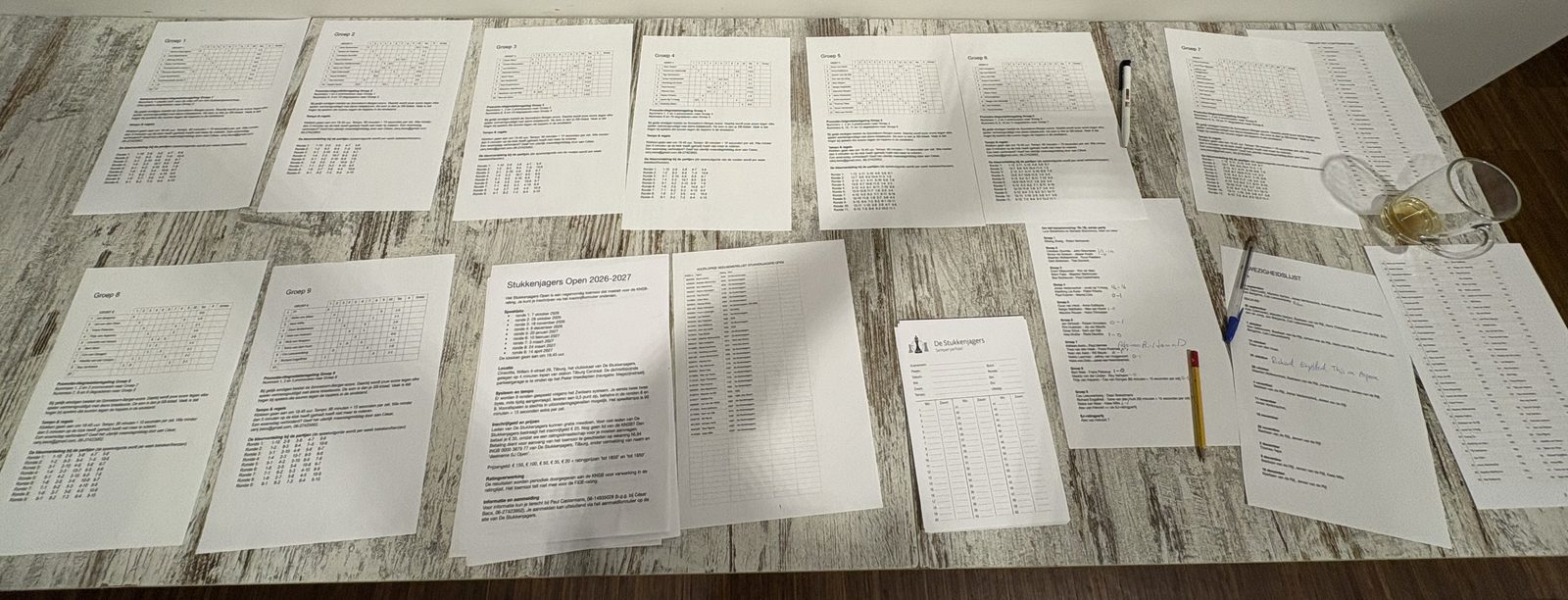
On a table near the door lie the printed group standings, the latest printed list of the club's internal ratings, and a stack of blank scoresheets for anyone to take. There are no assigned boards. People sit where they please.
Someone asks who he is playing. Someone else recognises an opponent and smiles with the particular mixture of friendliness and caution that belongs to club chess. You may know a person quite well and still want to beat him badly for the next three hours.
The hour has its private liturgies. Luuk Baselmans (25), the highest-rated player in the building, names these minutes as his favourite part of the whole evening. "Nice talks with people around you, you're still relatively fresh. You can joke around, and then: let's go, then it becomes serious."
Maurick Reuser (28), a professional pianist and composer, parks his bike where it will not crowd the front of the cinema, and eats a banana, a habit carried over from performing. He also owns chess underwear and chess socks. He likes them, he says, and does not need them.
At a quarter to eight, César stands and makes the announcements. Three minutes, five if there is news. Then the clocks start.
The menu
When César Becx joined De Stukkenjagers around 1977, in the afterglow of Fischer and Spassky, it had thirty-five to forty members. The larger Tilburg club then was De Wolstad, with around a hundred by the end of the decade; César played his national team competition for De Wolstad until 1986 or 1987, when he moved to the first team of De Stukkenjagers. De Wolstad later merged with Schavo to form De Drie Torens. Today De Stukkenjagers has around a hundred and seventy members, a figure that includes a youth section meeting earlier the same day, at another location. The Wednesday ladder itself has drawn between the mid-sixties and the mid-eighties players a cycle over the four seasons in these tables. Eighty-three played the final cycle of last season.
His organising principle is a menu. A club this size holds people with entirely different time budgets and appetites, so instead of one weekly format there are several. On Wednesdays members can choose the Groepencompetitie, the Stukkenjagers Open, or both, depending on what their week allows. There are external teams at weekends and a summer evening rapid. And since 2016, every Friday afternoon, any chess player is welcome to join the rapid Inloopschaak in the same atrium without registering in advance.
The Friday slot was a deliberate calibration. An afternoon catches students, shift workers and people on a half-day, not only retirees. It averages thirty-five players a week, close to what the room holds.
The Wednesday ladder is the subject here, for reasons the other formats do not share. It is the only one where the same players meet week after week for months, so a season leaves a record and not just a result. It is the one the club keeps in tables. And it is where most of what follows happened: the friendships, the rivalries, the teaching, the coming back.
The ladder itself is simple. Groups sorted by strength, eight of them last season and nine this season; each plays a full round-robin over a cycle of roughly three months; three cycles to a season; promotion and relegation at every boundary when a cycle ends.
In the third cycle, the top four groups play each pairing as a two-game rapid match. César introduced the variation some twenty years ago to give the stronger players a change of rhythm; the lower groups stayed classical because most players then in them preferred it. "Maybe this split should be reconsidered in future, to lower the threshold for the influx of online players who are more comfortable with rapid games," he says. "But for now the Inloopschaak suits that group sufficiently."
Everyone plays everyone in their group. Nobody can hide in a lucky pairing, and nobody is stuck: whatever group a player is placed in, the exit, in both directions, is written into the schedule.
The ladder also does something its designer did not put in the rules.
"If you start in a group, you naturally start hanging out with those people, because you play them," says Mika de Jong (20), who joined at fourteen and climbed from Group 7 to Group 4. "If you stick to the same group you mainly speak to the same people. But as you climb, you get exposed to other people. Your network gets bigger."
The groups sort chess strength. They also, quietly, make acquaintances one level at a time.
Two more pieces complete the machinery. Selection for the external teams runs on a published bonus-points formula: activity in the internal competition and the club's own events converts into virtual extra points, which can help a player secure a place in a higher team, according to an elaborate set of criteria.
"In a lot of clubs you see that over the years the stronger players restrict themselves to a monthly reunion at the Saturday competition games," Becx says. "They stop playing in the internal competition. Ambitious players in the lower echelons cannot challenge them anymore, and potential newcomers will be disappointed by the level of the internal competition. In a lot of clubs selections of the top teams never change, are decided in the back room by the players from last year. A large club like ours can't afford to be so conservative. Do you want to play in a team of friends? That's OK with us, but only in a class that suits the level of the weakest link. Everything must flow."

To cut short discussions about who is the better player in which type of competition, the club has kept a rating of its own since the nineties, the SJ rating. The national rating at that point was updated only two to four times a year and did not include internal games at all. "We wanted to register and show a player's progress more quickly," Becx says. "Rated games elsewhere count towards it too. For most members the Wednesday evenings are the bulk of their chess activities, so it is the internal competition that mostly makes their rating move."
One thing recurred across the interviews. None of the players who spoke for this article, whose groups over the years run from the top of the ladder to the bottom of it, described being made to feel small by it. César's claim, that players of all levels should be met with the same energy and respect and that nobody at the club mocks a weaker one, was confirmed unprompted from the other end: "Everyone was just really nice," Mika says of arriving as the youngest player in the competition. "I don't think I ever had any problems with anyone."
The fixed point
The line between Group 1 (average SJ 2144) and Group 2 (1955) is the hardest to hold in the competition. Across the twelve cycles in these tables, fewer than one in three players promoted from Group 2 are still in Group 1 the following cycle.
Promotion is common. Staying is not. The top group is small, the rating gap inside it is wide, and a single weak result can reverse the previous cycle's gain.
Above that line, one player has not moved at all.
Luuk Baselmans has been in Group 1 for all twelve reconstructed cycles, and longer. "Not since 2017, I think, even," he says, when the streak is put to him.
He is an organisational psychologist by profession and a FIDE Master since 2019. Last year, playing less chess than at any point in a decade, he scored three IM norms; he is one open-Swiss norm from the International Master title. On the internal list he stands at , more than a hundred points clear of anyone else playing.
The other names at the top change places against each other. Against Baselmans they do not. He functions, in the structure of the competition, as a fixed point: the figure the rest of Group 1 is sorted beneath rather than measured against.
Ask why the highest-rated player keeps entering a competition he has won more often than not, and he turns the question inside out.
I can also turn it around. The reason I became so strong, I think, was by playing here.LUUK BASELMANS
At his first club, TSV Rochade in de Reeshof, which folded in 2018 for lack of volunteers, his ceiling had been 1900. "If you don't have a lot of strong players around you, you don't learn to think in different ways." At Stukkenjagers, with no trainer at all, he went from 1900 to 2200 in a year. "By just simply consistently playing against 2000-rated players every week. It keeps you sharp. And that's also why I keep playing."
He is candid about what his presence does to the group. Would it be more exciting without him? "It would be more exciting. More open. I think since 2017 I won maybe a bit more than half of every cycle. I don't necessarily do it for the winning, I do it to stay sharp."
And from his side of the board he has watched why the retention figure is what it is.
"The fresh batch coming in from Group 2 often already approaches the game as if it's lost. It's a self-affirming prophecy: you make choices that are suboptimal because, simply, out of emotion, you're scared. The young players don't approach it that way. They just approach it like: let's fight. And you see it in the scores."
One of those young players sits at the other end of the same lesson.
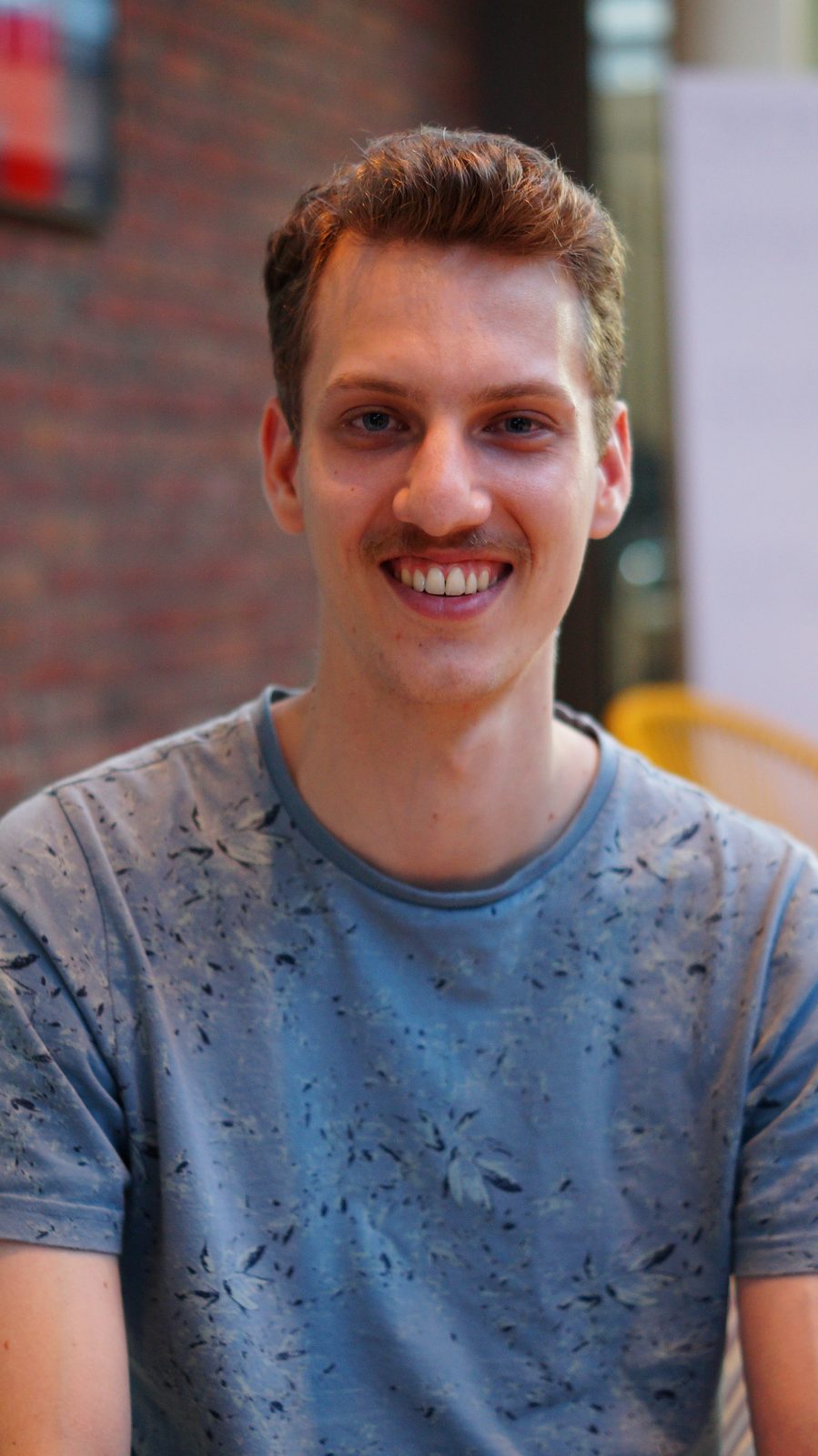
Simon de Graauw (19) reached Group 1 two seasons after joining and stayed three full cycles, a whole season, third place in his first, including a win over Remco Sprangers, rated more than a hundred points above him.
His formula for surviving at the top mirrors Baselmans's observation from the receiving end. "You have to score points against the people that come from Group 2, and then hope for the best against the very top. And not feel too intimidated by the players."
The difference between the top two groups, in his experience, is what a good position is worth. Below Group 1 he would reach one, his opponent would make an unprovoked error, and the game ended there. "In Group 1 that's not the case." A good position wins nothing by itself; the mistake has to be forced out of the other player. "You really need to win on the board. There are no easy points."
His third cycle went differently. He had started a computer science degree in Delft the previous autumn, with a schedule that gets him up at six every morning, and by the spring the accumulated tiredness met the one cycle in the season that the top groups play as rapid.
"On Wednesdays I am so tired, and especially with this rapid format, in time trouble I am not seeing anything clearly. I just do random moves. And of course that's not going to work against these players."
The season close relegated him to Group 2.
Below the fixed point the picture has texture. Robin Verhoeven held Group 1 for nine consecutive cycles, dropped once, returned immediately: the most continuous record among the players who orbit the line. Against Baselmans himself his record is far better than the rating gap would predict: ten meetings across four seasons, four of them two-game rapid matches, fourteen games in all, of which Baselmans has scored eight and a half, against a gap of some three hundred points.
"I had a phase with Robin where White just kept winning," Baselmans says. "The past few years I've really been working on my Black repertoire, so now this gap has been closed, I hope. But yeah. He scores well against me."
Ties Dumont is the clearest summit oscillator the standings produce: four entries into Group 1 and, with the season close, four returns to Group 2. And César Becx, who runs the ladder, is on it too, with four promotions to Group 1 and four relegations out of it in these seasons. Running the system earns him no softness from it.
The top group is not a plateau. It is a narrow shelf with one fixed occupant and a rotating cast beneath him, and the under-one-in-three figure is what that shelf looks like expressed as a rate.
The real mistake
Most visible player histories are not clean upward lines.
Among the hundred and two players with at least four cycles in these tables, the most common shape is neither steady improvement nor steady decline, but oscillation: movement back and forth between neighbouring groups. It accounts for seventy-eight of them, roughly three in four. Eleven only ever moved down. Seven never moved at all. Six climbed without ever dropping a group.
Ties Dumont is the cleanest example near the top. His sequence since 2022 runs, with one held cycle at the top, like this: G3, G2, G1, G2, G2, G1, G2, G2, G1, G1, G2, G1.
It would be easy to call that instability, but the word is too blunt. A player who reaches Group 1 several times has repeatedly earned access to the top group. What the record does not show is occupation. It shows return. Each return confirms strength; each drop reopens the question. The line keeps asking the same thing in slightly different form: can the top group be held, or only revisited?
What the tables cannot show is what the inside of a downward cycle feels like.
Maurick Reuser can. He took up chess seriously three years ago, after watching two friends play at a party, and went from a 300 rapid rating online to Group 4 of this competition. He arrived in Group 4 at the start of last season and lost his first game, against Maarten Werkhoven, from a winning position.
"I panicked. I was like, now I have to do something wild to complicate the game. The second move after the first mistake was actually the real mistake. I lost control in my mind."
The damage outlived the game. "It made such a big impact on me that in the games after, I had a feeling I had to keep fighting unreasonably, to stay in the competition. I played too aggressively. I didn't accept any draws, although it would have benefitted my score."
He scored one point in the whole cycle, and was relegated. He also knows what he had stopped doing. In the cycles before, he had taken lessons with a coach and learned a great deal; after his successes he stopped scheduling them, meaning to resume when he struggled again. "And struggle I did," he says. He has regular lessons now, regardless of how he is playing.
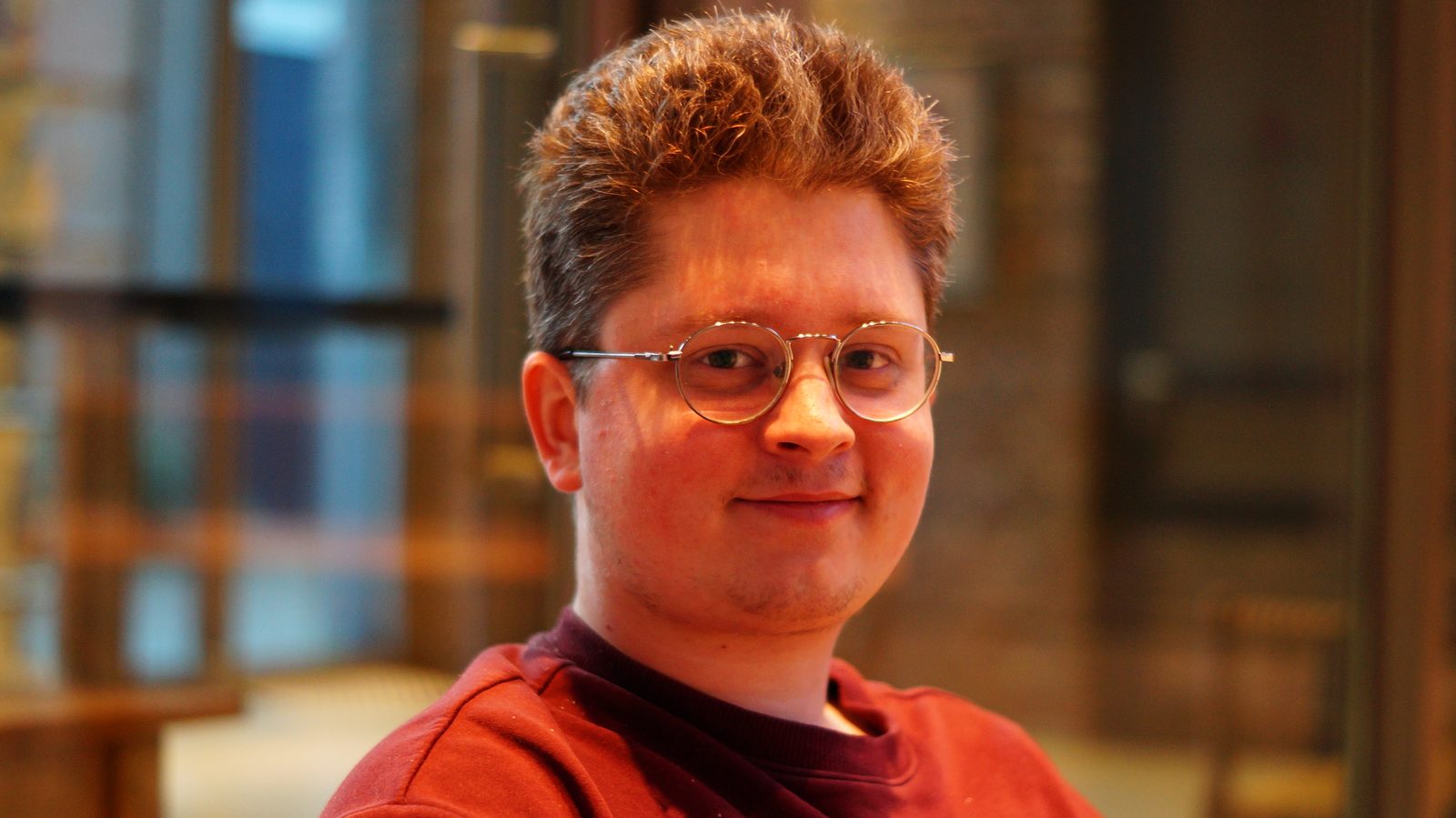
Mika de Jong owns the same experience from two seasons earlier, with two years' distance and better jokes. He was relegated from Group 5 around his high-school finals.
"At the time I said: because of my finals I relegated, I didn't have time for chess. But looking back, I never did anything for my finals. So I had all the time to play chess. I just played really badly."
Then the other half, the half that keeps the ladder honest: "After I was relegated, for some reason I wanted to prove, to myself or to others, that I was good enough." The tables show the relegation, and then show him in Group 5 again the following cycle. Two cycles later he went up to Group 4.
The psychology is not confined to bad cycles. The good positions carry their own.
Mika developed a walking habit precisely for the games he was winning. "When I'm in winning positions I tend to get nervous a lot. There was always this fear of screwing it up. I know if I stay at the board too long I'm going to overthink things. I've lost many games like that, so I take a walk and come back when he's played his move."
Maurick, who performs on concert stages for a living, has no hesitation about which nerves are worse. "More nervous for a chess game." On stage the rehearsal is done and the narrative carries him. At the board, "you prepare something technical and analytical, and staying in an analytical state of mind is stressful."
And César Becx, almost fifty years in, names the same weakness in himself. "I'm thinking too often and too long about crazy provocative moves or how to finish good positions quickly, drifting into time trouble. And then, with age-ing, the panic is liable to start."
Three generations of one club, and a finding the tables would never have surfaced alone: the positions that frighten club players most are the ones they are winning.
Maurick once wrote a piece of music inspired by Capablanca's Copycat game from 1918: two singers as the two players, moving in mirrored parallel until the mirror breaks and, in his words, a checkmate occurs. Asked what a chess game is to a composer: "The tension and release, the development, the transitions and transformations. A chess game is a fantastical story, from beginning to end."
You can easily see the drama that occurs in a chess game by checking the engine's evaluation bar. This shape is also a kind of story.MAURICK REUSER, ON WHAT A CHESS GAME IS TO A COMPOSER
Then, in the cycle that closed in July, the two cleanest patterns in the whole dataset diverged.
Peggy van Amerongen's record is the most regular shape in the archive: ten consecutive cycles alternating between Group 1 and Group 2 without a single repetition. The season close, relegating her from Group 1 at two and a half points and back to Group 2, kept the pattern intact.
César Becx's alternation, six consecutive reversals, every cycle undoing the one before, ended in the same weeks. Five and a half from fourteen in Group 2: no promotion, but relegation, the first cycle in three years that did not reverse its predecessor.
"It's inevitable that lack of ambition and concentration take their toll, haha," he says. "Group 3 will be quite a new challenge."
One pattern held. One broke. Nobody planned the symmetry.
Four shapes at the Group 1 boundary
Not everyone on the ladder knew it was one.
Magic van Heeswijk did not know, at first, that any of it was being written down. He played his Wednesday games without following the club's page, not knowing the results and the ratings were posted, not sure why a particular game seemed to matter to the people around him. When he found the tables, he started to take the competition seriously, and it became more fun. His own record, once he looked, ran G8, two cycles in G7, three in G6, a relegation, and then the strongest cycle of his club career: nine and a half out of eleven in Group 7, nine wins, the most of anyone in the club that cycle.
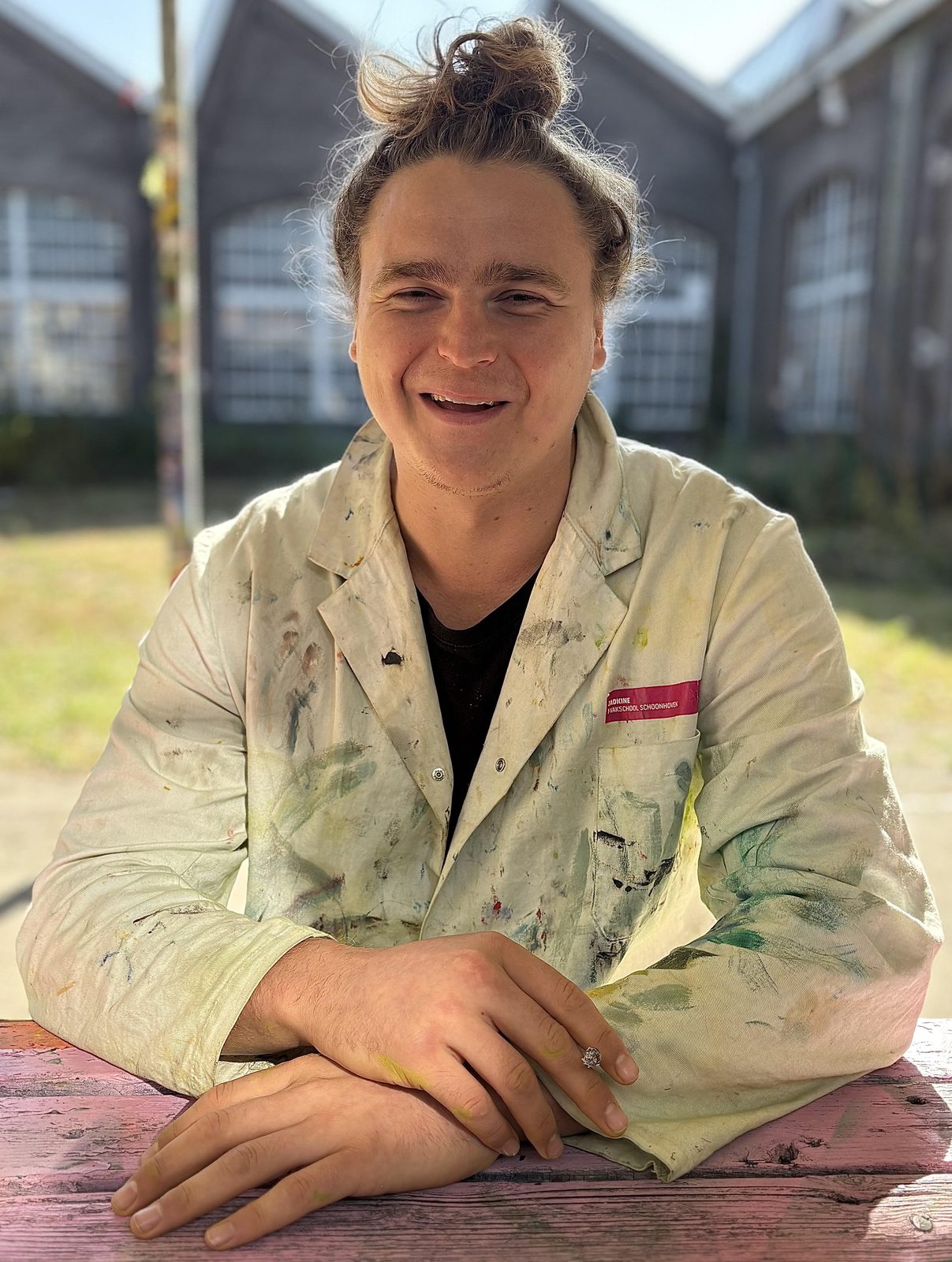
A friend, Daniel Leeuwenberg, had taught him the moves in exchange for skateboarding lessons, and had left the club for the skate park around the time Magic arrived. "It always gets stronger from it," he says of the relegation. Skating and painting taught him the same lesson: when he fails, he goes harder. "I'm really able to fail, but I'm also able to climb again."
He does not remember it as three cycles. "In my imagination it was like one cycle and then I lost it," he says. The tables say three.
The opponent he most wants to beat is Max Mutter, whom he also knows from the skate park. He prepared for Max's f-pawn push, played the best move, and then lost the thread. They are both in Group 6 this season, so the rematch is on the schedule.
Who brings whom
Every climb here that started young started with another person.
Simon de Graauw's began at the Beatrix College in de Reeshof, where a schoolmate one year older kept talking about his chess club. The schoolmate was Mika de Jong.
They were friends first, and the rivalry came from that as much as from the invitation. "I invited him to the club once," Mika says. "And because I invited him, I wanted to be better than him all the time. But he's a great talent. It was only a matter of time before he would pass me."
The rivalry produced at least one legend. A Group 5 game between them, winter, both thirsty. Mika offered to fetch hot chocolate; Simon came along; they paused the clock and sat over the cups for a few minutes, talking. Then they went back to the board.
"He immediately played a move without thinking, and he completely hung his bishop," Mika says. Simon resigned shortly after. "It was all because of the hot chocolate. Now when we play, I always offer him a chocolate."
Pass him he did. Simon's line runs from a trial evening in Group 7, a Vienna Game learned from YouTube and a bishop sacrifice on f7, through every group to the top: 6, 5, 5, 4, 3, 2, 2, and then a full season in Group 1.
Asked how the climb was engineered, he declines the premise. "It was a byproduct of having fun with chess. That's really it. I had a lot of fun studying chess, watching chess, and it just came along."
The club noticed before he did. "Even players I haven't played, when I come to analyse a game with them, they ask me: what is the best move here? What would you play? From the whole club, they notice me. It's a good feeling."
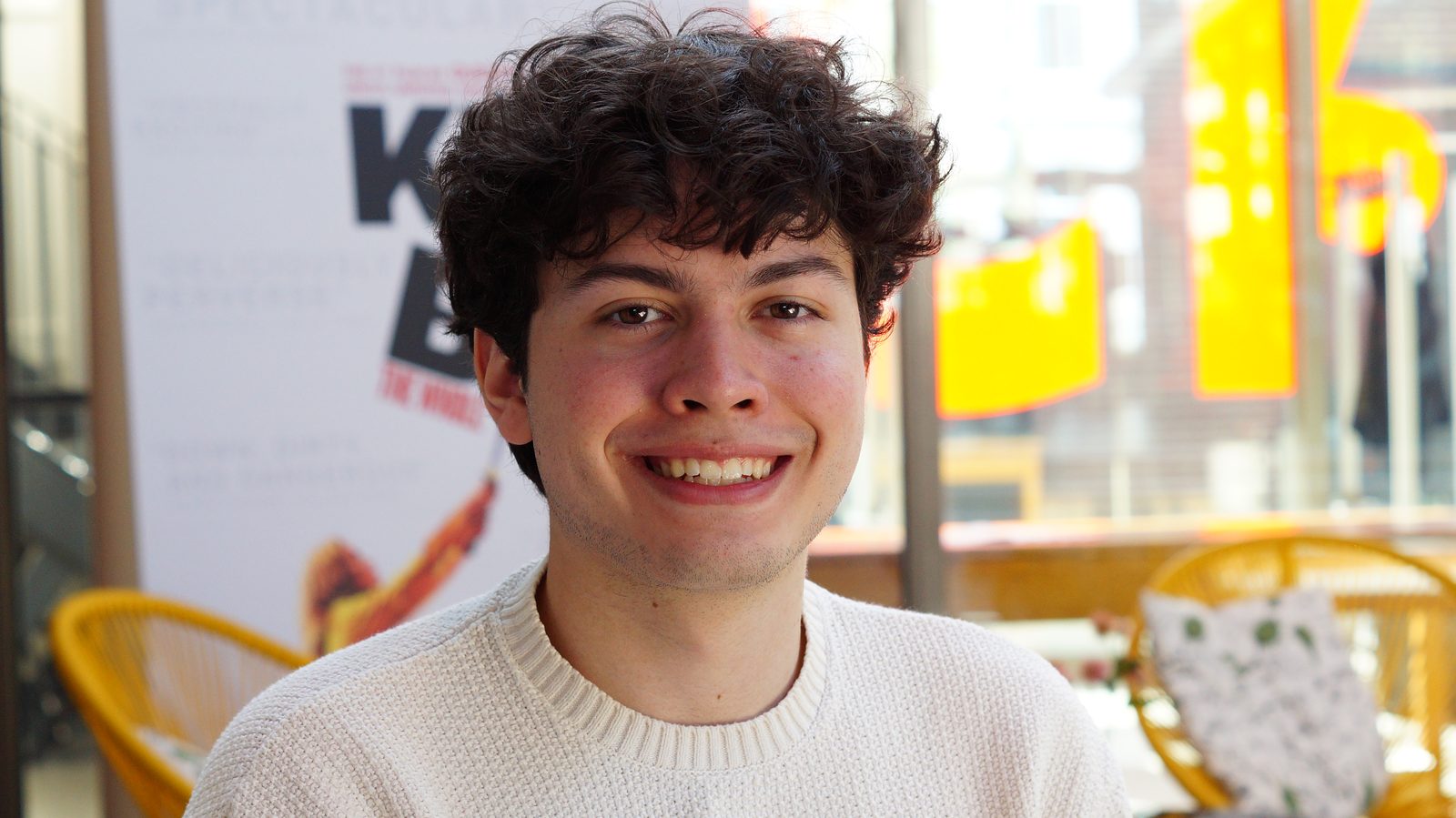
Where the next of them come from is no accident either. In 2021 the club founded a youth division. Among its founders was Baselmans, whose teaching career had begun at his first club when they told him they had nothing left to teach him.
The launch, through the city's Try-Out Sports programme, produced one comparison nobody involved forgets: the checkers club in the same building drew a handful of sign-ups. Chess drew forty-eight children to the try-outs, and twelve of them joined the youth division the year after.
The division has already fed the ladder. Simon passed through its Wednesday lessons, a little older than the rest of the class, taught by the man he now faces across the board in Group 1.
The youngest climber in these tables experienced the ladder as a rhythm of fear and outgrowing. Christian Zouridis, fifteen, rose from Group 7 to winning Group 3 last season, and describes each rung the same way. "After I promoted, I was a bit scared, because I thought it would be a huge difference. I was playing maybe a bit too boring: I want to stay in this group. And the next cycle: maybe I'm a bit too good for this group, actually."
Two cycles per group, all the way up. The Wednesday evening, in his framing, is not even the main event: "for me it's like a training field, to try new things," a place to test preparation meant for weekend tournaments.
The ladder rewarded him anyway. He calls winning Group 5, "a group full of very underrated players", the best feeling of his nine cycles. And he measures each new group by the shrinking of gifts: in Group 3, the opponents are "blundering a bit less, doing every aspect a little bit better."
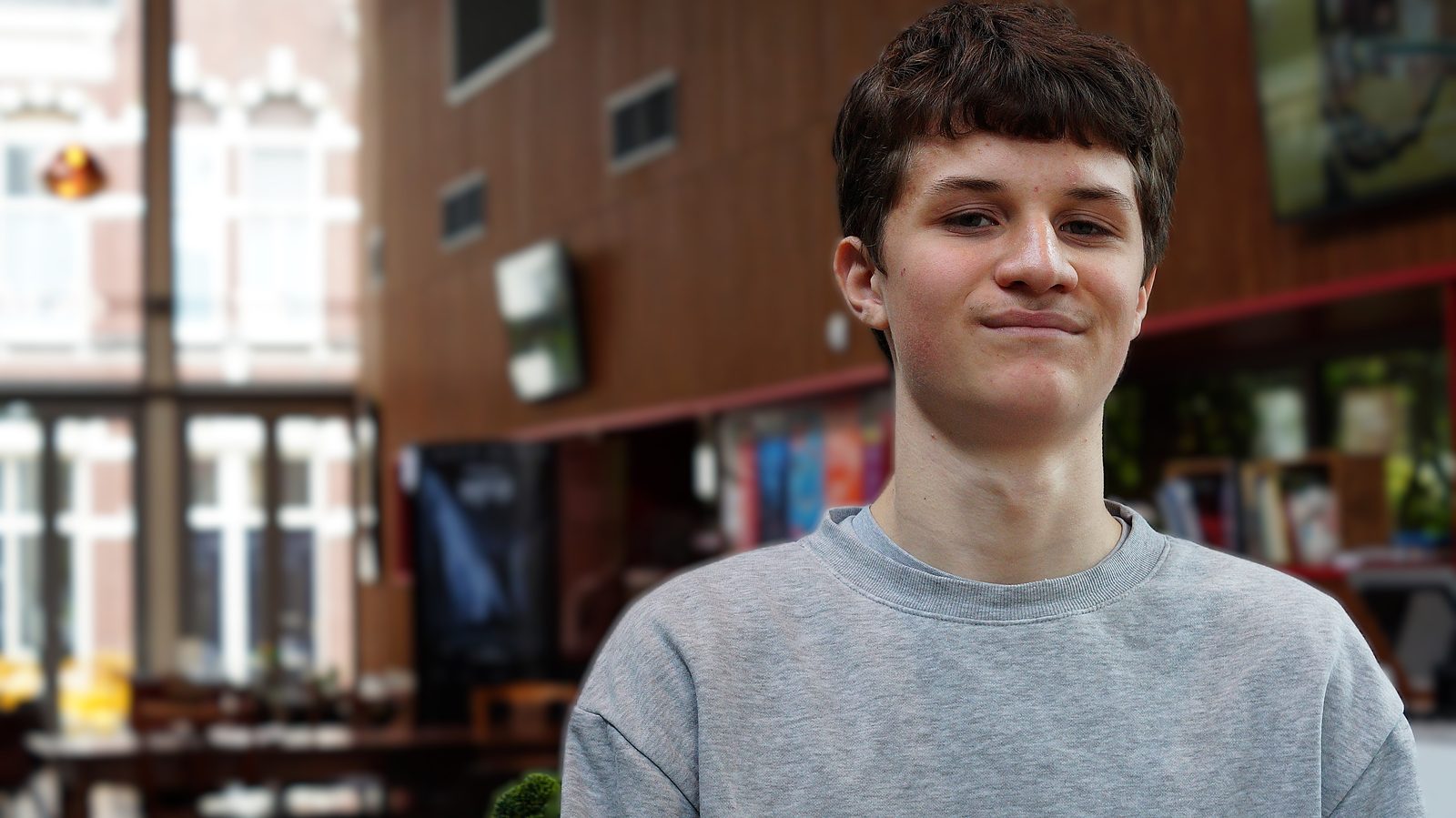
The ladder does not keep everyone, and the reasons it loses people are not the ones you would guess.
Mika de Jong left at the end of last season, after a final Group 4 rapid cycle at fifty percent. There was no falling-out and no story. "Nothing happened. There was no big incident that made me decide I don't want to play for this club anymore."
There was a Friday-evening club he had always also loved, SG KiNG, blitz, a younger crowd, "a really good click with the people". And there was a history degree in Nijmegen and a side job, and something had to give.
"Chess became more a part of my social life. I'm coming for the game. But with my schedule it's been too busy. Nothing personal about the club. Just time management."
What he misses is precise. "The weekly classical games. If you have a really fun game it can be captivating, you can look at it for hours. Maybe I would have been a stronger player if I could have kept playing those weekly games. But that's speculation. You never know that for sure."
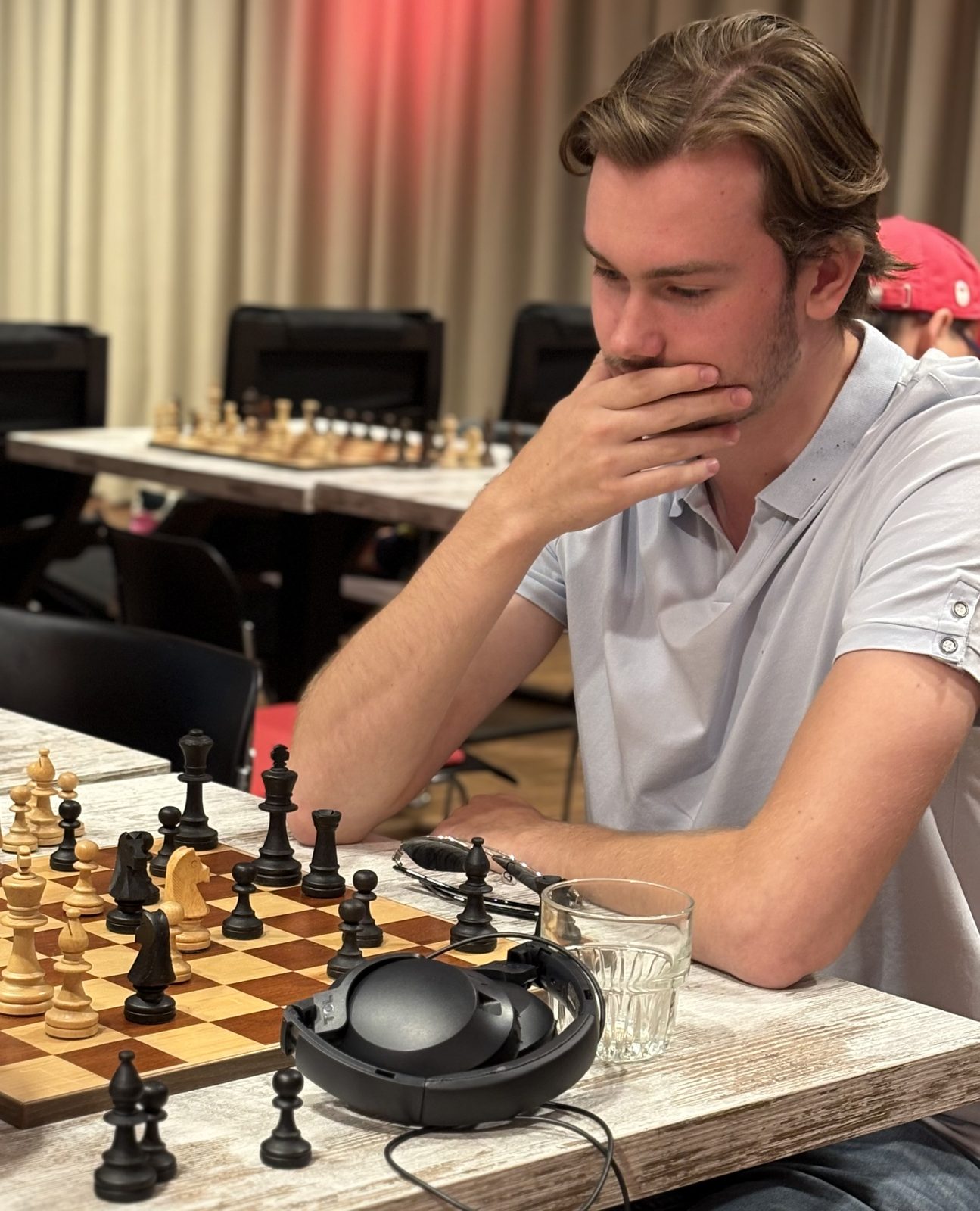
Maurick Reuser did not leave. He split his Wednesdays. An offer to teach a choir on that evening was a job he wanted, and income comes before hobbies, but he arranged it so that he could still play classical at Stukkenjagers some weeks. "It's a fun job to do, and I also need money."
To keep playing a classical game every week and develop his chess, he found a Tuesday club as well, in Goirle, where there is no rating and no ladder and the evenings run on the Keizer system. The different system surprised him, pleasantly: a relaxed atmosphere in which he could experiment with openings and test new things.
The difference between his two clubs, as he describes it: "It happened a couple of times that people resigned because they didn't want to play anymore, although the positions were far from over. That would never happen at Stukkenjagers. People would go on until the result is undeniable."
So Mika has left the Wednesday competition and Maurick plays it only some weeks. In neither case was anything wrong at the club: what took the evening was study and work for one, a choir for the other. Both still come to the Friday Inloopschaak when they can.
While this article was being written, Christian Zouridis won Group 3 at ten points from fourteen and was promoted to Group 2. The climb that began in Group 7 three seasons ago is now one boundary from the top.
Three numbers
Three rating systems appear in these pages, because no single number describes a player's position in the club.
The SJ rating is the club's own, computed from every internal game, and gives the closest view of current internal strength. The KNSB rating is the Dutch national number. The FIDE rating, where it exists, is the international reference, though many club players do not play enough FIDE-rated games for it to say much.
The gaps between a player's numbers tell small stories. Simon de Graauw's SJ rating stands far above his national one, and the reason is logistics rather than mystery: "I just don't play any tournaments. I don't have time." The national number is not wrong. It is starving.
What a rating is for turned out to be the most quietly contested question in these interviews.
Baselmans remembers what the SJ rating meant to him at twenty: home past midnight after a Wednesday win, "you keep scrolling, refreshing, because César would refresh the Stukkenjagers rating at one, two o'clock." Now, chasing a title, only the FIDE classical number counts. "The golden standard."
Two minutes' walk from the cinema, in the bar of Het Wapen van Tilburg, the club Mika now helps organise evenings for runs no internal rating at all, on principle. "The rating is not that important. The most important thing is if you have fun."
And in Goirle on Tuesdays, Maurick found a relaxed atmosphere in which no rating meant freedom to experiment.
None of the three positions refutes the others. A rating is an instrument, and the clubs of one small city have tuned it to three different purposes. The Stukkenjagers tuning, measurement without national stakes, is what made these tables possible.
One caution completes the picture. Not every member plays the internal groups; some strong players appear only in external teams or weekend tournaments. And the youngest competitors are deliberately treated here as names and results only. The tables know things about developing players that it is not for these pages to characterise.
The season closes
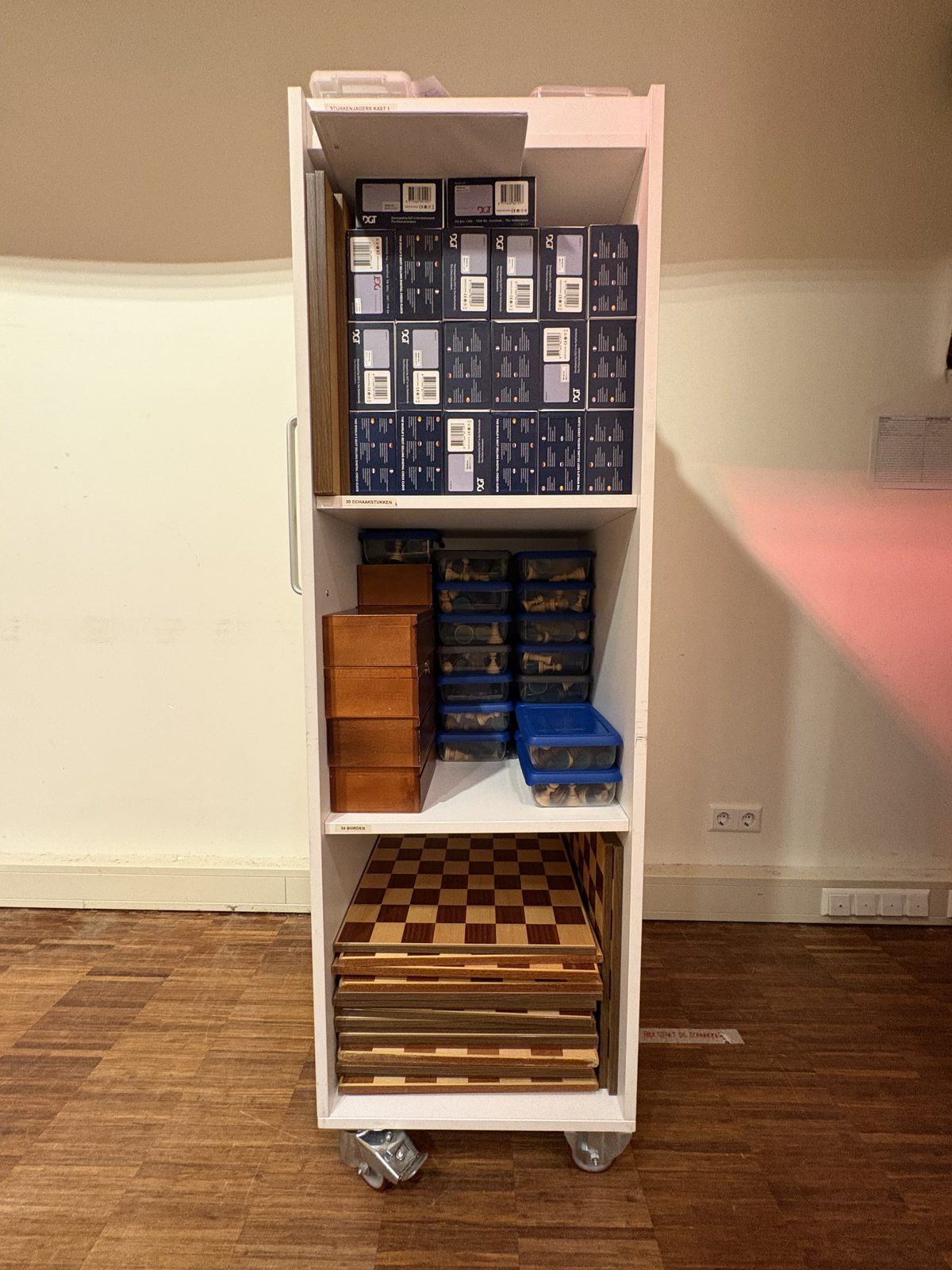
The season these tables close did not finish on its last Wednesday; the final games were played into September, the last of them a rapid match on the first evening of the new season.
The ladder, true to itself, refused to be summarised before it was done.
Then the championship. Luuk Baselmans and Bertalan Bokorovics had qualified for the two-game play-off: Baselmans won two of the three cycles, Bokorovics the other. De Stukkenjagers spent most of its life declining to have a champion at all, on the grounds that it was a student club from a café, and first awarded the title for the 2021-22 season. In that first year no match was needed, because Baselmans won all three cycles outright. He has held it every year since except 2024, when his brother Sam took it. September's would be the fourth title match.
It was played over two Wednesdays in September, among the ordinary games of the new season, on no special board, though many looked at it. Luuk won the first with Black, from a position the club's own report called lost. In the second, needing only a draw, he got one: Bertalan, with Black, pressed, ran short of time, and could not find the win. Luuk Baselmans, club champion for the fourth time, by a point and a half to a half.
By then the volunteers had already set the playing room at Cinecittà for the new season, the clocks idle beside the boards, and eighty-seven players had been sorted into nine groups, one more than the year before. The record these tables have been reading had begun writing its next season.
How the evenings end is answered differently by everyone and identically by everyone.
Mika, in his Stukkenjagers years, had a fixed close: win or lose, wait at the bar for Bart Plasmans, a few blitz games, a drink, a talk. "A fun after-chess routine." He misses it.
Baselmans, who has won more cycles than anyone and is one norm from an international title, puts it plainest: "The social aspect is maybe the most important aspect of chess."
Magic, in Group 6, has the same answer and a shorter one. "The best part for me is always when I leave," he says. "I feel like, yeah, it was so nice."
And Maurick, who was relegated last season and finds the whole thing harder than performing on a concert stage:
"Chess itself is sometimes too stressful for me. But what really compensates is meeting the people. I do really enjoy the meeting of like-minded enthusiasts."
The clocks stop, one board at a time. Some of the players stay behind, a few who agreed to and a few who simply do, and put the room back the way the cinema needs it.
Maciej Cios. Interviews conducted in Tilburg, May to September 2026. Standings reconstructed from De Stukkenjagers' internal competition records, seasons 2022-23 through 2025-26. Every interviewee reviewed and approved their quotes and portrayal before publication.